PHL-Microsat: the Philippines Joins Space Race

Manila, Philippines — Last 2014, the Philippines, a developing country, finally joined the colossal world of space technology upon the birth of the PHL-Microsat program.

In collaboration with the University of the Philippines Diliman and Japan’s Hokkaido University, the Department of Science and Technology (DOST) established the pioneer Philippine Scientific Earth Observation Microsatellite (PHL-Microsat) Program in the country. Currently, it is succeeded by the Space Technology and Applications Mastery, Innovation and Advancement (STAMINA4Space) Program, and will be referred to as such from this day forward.

The initial goal of the PHL-Microsat program was to build and launch a microsatellite technology with multispectral and high precision to effectively observe the earth’s atmosphere as well as to aid the country in disaster’s risk management.  

Diwata 1 – Microsatellite

In the first quarter of 2016, PHL-Microsat Program successfully launched its first satellite Diwata-1 from the International Space Station (ISS). Diwata-1 is a low earth orbit (LEO) satellite with a speed of 7 kilometers per second. During its initial launch, it was found at an altitude of around 400 to 420 kilometers from the earth’s atmosphere enough to capture images of the atmosphere as well as to maintain communication.

Diwata-1 has the capacity to undertake scientific earth missions related to weather observation, environmental monitoring, and disaster risk management. It was designed to serve the science community for 18 months since the day it was launched in the atmosphere. Nonetheless, it outstripped the expectation as it was able to last until the first quarter of 2020. 

In the four-year space journey of Diwata-1, it was able to capture 45, 572 images. Almost 17,000 of such were images related to the Philippines. The captured portraits by the microsatellite were used to monitor the atmosphere, marine environment, land and climate change.

After four years of orbiting the earth’s atmosphere, the mission of Diwata-1 has already ended. The satellite was last seen at an altitude close enough to the accepted boundary between outer space and Earth’s atmosphere. Therefore, the chances of successful communication with Diwata-1 is very low.

“Diwata-1 is expected to de-orbit and burn up due to increasing friction with the atmosphere, ultimately ending its service to the country. Initially forecast to spend 18 months in orbit, Diwata-1’s orbital lifetime lasted almost four years,” STAMINA4Space program.

Nonetheless, the termination of the Diwata-1’s mission does not imply that the space race of the country has ended already. Rather, it serves as a legacy in the development and progress of S&T in the Philippines. 

Diwata 2 Launched

The PHL-Microsat Program has intensified space program by developing a succeeding microsatellite Diwata-2, last October 2018. Diwata-2 was able to take almost 35,000 pictures on its 2nd-year orbit in the atmosphere. 

Sources:

University of the Philippines Diliman. (n, d). PHL-Microsat General Info. Retrieved from https://phl-microsat.upd.edu.ph/about#geninfo

University of the Philippines Diliman. (n, d). PHL-Microsat Diwata 1. Retrieved from https://phl-microsat.upd.edu.ph/diwata1

University of the Philippines Diliman. (n, d). PHL-Microsat Diwata 2. Retrieved from https://phl-microsat.upd.edu.ph/diwata2

Lalu, G. (2020). PH’s first microsatellite Diwata-1 decommissioned. Retrieved from https://newsinfo.inquirer.net/1255415/phs-first-microsatellite-diwata-1-decommissioned

Nazario, D. (2020). PH microsatellite Diwata-2 marks 2nd year in orbit. Retrieved from https://mb.com.ph/2020/10/31/ph-microsatellite-diwata-2-marks-2nd-year-in-orbit/

Virgin Coconut Oil: A Potential Antiviral Agent Against COVID-19

Manila, Philippines — After six months of tremendous experiments, Filipino scientists carrying out research on the efficacy of coconut oil or virgin coconut oil (vco) on patients with COVID-19 have provided evidence of virgin coconut oil as a potential antiviral agent against the new coronavirus disease. 

“There are still alternative solutions against COVID-19 aside from vaccines. Although further investigation is needed before we develop a possible prevention or treatment option, we aim to give Filipinos hope through our ongoing local research initiatives,” Science Secretary Fortunato de la Peña said in a radio interview.

According to de la Peña, during clinical trials it was discovered that compounds from the oil can decrease coronavirus count by 60 to 90 percent for mild to moderate cases.

Furthermore, it was also found that such compounds can improve cell survival rate. Certain studies, however, must be made to know whether the oil compounds can decrease the replication rate of the virus.

“There are still alternative solutions against COVID-19 aside from vaccines. Although further investigation is needed before we develop a possible prevention or treatment option, we aim to give Filipinos hope through our ongoing local research initiatives,” Science Secretary Fortunato de la Peña said in a radio interview.

According to de la Peña, during clinical trials it was discovered that compounds from the oil can decrease coronavirus count by 60 to 90 percent for mild to moderate cases. Furthermore, it was also found that such compounds can improve cell survival rate. Certain studies, however, must be made to know whether the oil compounds can decrease the replication rate of the virus. 

“The results are very promising, as not only does it show that VCO, by itself, can destroy the virus, but it also has a key mechanism in regulating the immune response against COVID-19.” Dr. Jaime Montoya, executive director of the PCHRD said. 

In collaboration with the Department of Science and Technology, the team of Filipino scientists led by Dr. Fabian Dayrit of Ateneo de Manila University sought to investigate whether coconut oil components can be effectively used to prevent or treat COVID-19 infections.

Currently, there is still ongoing research and clinical trials to provide a more comprehensive analysis of the oil.

In recent years, coconut oil, a readily available resource in the Philippines, has caught the attention of the scientific community for its apparent broader health benefits in effectively killing viruses and pathogens that invade human health. 

Sources:

Gonzalez, C., J. (2020). Filipino experiments revealed evidence that virgin coconut oil may be a means to defeat COVID-19. Retrieved from http://pchrd.dost.gov.ph/index.php/news/6599-vco-a-potential-antiviral-agent-against-covid-19-filipino-research

Philippine Daily Inquirer. (2020). Virgin coconut oil a potential antiviral agent vs COVID-19, research shows. Retrieved from https://newsinfo.inquirer.net/1349580/vco-a-potential-antiviral-agent-vs-covid-19-research-shows#ixzz6cqO21o00

German Press Agency. (2020). Filipino scientists claim coconut oil can destroy coronavirus. Retrieved from https://www.dailysabah.com/life/science/filipino-scientists-claim-coconut-oil-can-destroy-coronavirus

Policies

National Science and Technology Plan, 2002–2020 (NSTP) and the Harmonized Agenda for Science and Technology, 2002–2020

R&D Researchers and Personnel per million population from 2002 to 2013.1

The Philippine government focuses on building technological self-reliance through the National Science and Technology Plan, 2002-2020. Meanwhile, the Harmonized Agenda for Science and Technology, 2002-2020 builds on NSTP, 2002-2020 to provide detailed plans to achieve technological self-reliance especially for the purposes of economic growth and disaster risk reduction. The aims of these plans are reflected in legislation such as the Fast-Tracked Science and Technology Scholarship Act of 2013 which “expands the coverage of existing scholarship programmes and strengthens the teaching of science and mathematics in secondary schools,” and the Philippine National Health Research System Act of 2013 has :formed a network of national and regional research consortia to boost domestic capacity.”2

Source:

United Nations Educational Scientific and Cultural Organization. “Southeast Asia and Oceania,” in UNESCO Science Report: towards 2030 (Paris: UNESCO, 2015), 693-731. https://unesdoc.unesco.org/ark:/48223/pf0000235406.

Projects

Undergraduate Scholarship Program1

DOST-SEI promoting applications for the scholarship program through the #Push4Science caravan.

The Department of Science and Technology through the Science Education Institute offers a scholarship program for students enrolled in “priority courses,” these courses are aligned for future careers in science and technology to increase human capital in the field. This scholarship is designed to cater to students in both low and middle income backgrounds so long as they pass an aptitude test, a screening process, and maintain high academic performance during their study, should they pass the two prior stages mentioned.

Project NOAH (Nationwide Operational Assessment of Hazards)

This is a screenshot of the vicinity of Ateneo on the Project NOAH website. The highlighted areas indicate a flood hazard reaching 0.5 meters in five years’ time based on different rainfall scenarios. The area of Ateneo that is at risk is estimated to be around 0.02 km2, which is concentrated at SOM forest.

Project NOAH is a multidisciplinary research center between research institutes of the University of the Philippines, the Philippine government, and other non-government organizations. These groups collaborate to improve Disaster Readiness and Risk Reduction in the Philippines, as well as climate change adaptation and mitigation efforts, and other related research interests and thrusts.2

It is established in response to a call for a more “accurate, integrated, and responsive disaster prevention and mitigation system, especially in high-risk areas throughout the Philippines” during the Aquino administration. Project NOAH has the following components: 1) Distribution of Hydro-meteorological Devices in hard-hit areas in the Philippines (Hydromet); 2) Disaster Risk Exposure Assessment for Mitigation – Light Detection and Ranging (DREAM-LIDAR) Project; 3) Enhancing Geohazards Mapping through LIDAR; 4) Coastal Hazards and Storm Surge Assessment and Mitigation (CHASSAM); 5) Flood Information Network (FloodNET) Project; 6) Local Development of Doppler Radar Systems (LaDDeRS); 7) Landslide Sensors Development Project; and 8) Weather Hazard Information Project (WHIP).3

Sources:

Presidential Communications Operations Office. “About Project NOAH,” Official Gazette of the Republic of the Philippines. https://www.officialgazette.gov.ph/programs/about-project-noah/.

Department of Science and Technology. “DOST-SEI invites Grade 12 students to apply for S&T scholarships,” June 7, 2019. http://www.sei.dost.gov.ph/index.php/news-archive/266-dost-sei-invites-grade-12-students-to-apply-for-s-t-scholarships.

List of Departments and Agencies

Department of Science and Technology

The executive department of the Philippine government responsible for the coordination of science and technology-related projects in the Philippines and to formulate policies and projects in the fields of science and technology in support of national development.1 The mission of the agency is to direct, lead, and coordinate the country’s scientific and technological efforts geared towards maximum economic and social benefits for the people.2

The Department of Science and Technology (DOST) as an executive department is composed of different agencies and services directed in cultivating the culture of science and technology in the Philippines. The following are some of the scientific and technological agencies/services instituted by DOST:

1. Philippine Atmospheric, Geophysical and Astronomical Services Administration

PAGASA is mandated to “provide protection against natural calamities and utilize scientific knowledge as an effective instrument to ensure the safety, well-being and economic security of all the people, and for the promotion of national progress.” (Section 2, Statement of Policy, Presidential Decree No. 78; December 1972 as amended by Presidential Decree No. 1149; August 1977).3 The mission of such an agency is to secure the lives and properties of the state through timely, accurate and reliable weather-related information and services.4

2. Philippine Nuclear Research Institute

The PNRI is mandated to undertake research and development activities in the peaceful uses of nuclear energy, to institute regulations on the said uses and to carry out the enforcement of said regulations to protect the health and safety of radiation workers and the general public.5 This agency aims to improve the quality of the Filipino lives through the highest standards of research and development, specifically in nuclear and radiation services, as well as to efficiently implement nuclear and radiation policies for safety practices and regulations.6

3. Philippine Institute of Volcanology and Seismology

PHIVOLCS is principally mandated to mitigate disasters that may arise from volcanic eruptions, earthquakes, tsunami and other related geotectonic phenomena.7 The department provides timely, quality and socially-inclusive information and services for the warning, disaster preparedness and mitigation through the development and application of technologies for the monitoring and accurate prediction of related hazards, risks and natural calamities, such as volcanic eruption, earthquakes and tsunami.8

4. Science and Technology Information Institute 

STII is one of the service institutes of the Department of Science and Technology (DOST) established as the information and marketing arm of the DOST by virtue of Executive Order No. 128.10 The goals of such an agency are to establish a science and technology databank and library, to disseminate science and technology information, and to undertake training on science and technology information.11

5. Philippine Science High School System

The Philippine Science High School System, an attached agency of the Department of Science and Technology, operates under one System of Governance and Management, provides scholarships to students with high aptitude in science and mathematics.12 The System prepares its students for careers in Science and Technology and contributes to nation-building by helping the country attain a critical mass of professionals and leaders in Science and Technology.13

6. Technology Application and Promotion Institute 

TAPI is created by virtue of Executive Order No. 128 as one of DOST’s service agencies with the primary responsibility of promoting the commercialization of technologies and marketing the services of other operating units of the Department.14 The agency is directed in an effective and efficient innovation system towards the adoption and utilization of inventions, innovations, and services.15

Colonial Stage

The astronomy building of the Manila Observatory, circa 1895.1

The Jesuits established the Manila Observatory in 1865. Directed by Padre Federico Faura, it observed weather patterns and began issuing typhoon warnings in 1879, by 1880 it observed earthquakes as well. It was recognized by the Spanish government as the official Philippine institution for weather forecasting in 1884. The American then established it as the Philippine Weather Bureau in 1901, and it remained so until its equipment and data were destroyed by the Second World War. It was rebuilt in 1951 in Baguio, and later transferred to Loyola Heights within the Ateneo de Manila University. It currently conducts research on seismic, geomagnetic, radio and solar physics.2,3

Portrait of Anacleto del Rosario4

Anacleto del Rosario was a Filipino chemist during the Spanish colonial period, and is now regarded as the Father of Philippine Science and Laboratory.5 In 1888, the Laboratorio Municipal de Manila was established and he was named director. The laboratory had a section dedicated to perform chemical analysis on drinking water, pharmaceuticals and food materials named Laboratorio del Analisis Quimico.6, 7

Class of senior nurses being taught operating room techniques at the Philippine General Hospital.8

The United States colonial government adopted a policy of “benevolent assimilation” that is dedicated for the pacification of the Filipinos. A public school system was established, as well as trade schools. Notably, many nursing schools were opened. Filipinos were trained with English and up-to-date medical knowledge stateside. They were then offered job opportunities in the United States, which resulted in their immigration and the formation of a Filipino diaspora in the states.9

A Filipino farmer planting rice.10

Research and development during the American colonial period was directed to agriculture, food processing and pharmaceuticals. Little to no investments were made for local industries as the Philippines was made a direct importer of finished goods from the United States.11, 12 To this day, the Philippines is lagging behind other countries in manufacturing, it remains an exporter of raw materials and an importer of finished goods, as evidenced by our local abaca fiber industry, used for the manufacturing of surgery grade face masks, yet we have experienced a shortage of these masks during the early days of the pandemic.

Sources:

“Manila Observatory,” in Manila Nostalgia, April 28, 2013, http://www.lougopal.com/manila/?p=561.

“History,” Manila Observatory, http://www.observatory.ph/about/.

Crisanto M. Lopez. Science and Technology in the Philippines (Ateneo de Manila University, 2018).

Warwick Anderson. “Immunization and Hygiene in the Colonial Philippines,” Journal of the History of Medicine and Allied Sciences 62(1) (2007), 1-20, https://doi.org/10.1093/jhmas/jrl014.

Anne Rice. “Why are there so many Filipino nurses in the U.S.?” Berkley News, May 28, 2019. https://news.berkeley.edu/2019/05/28/filipino-nurses-in-the-us-podcast/.

Christina Thornell. “Why the US has so many Filipino nurses,” Vox, June 30, 2020. https://www.vox.com/2020/6/30/21307199/filipino-nurses-us.

Pre-colonial Stage

The first map of the Philippines, made by Petrus Kaerius (1598).1
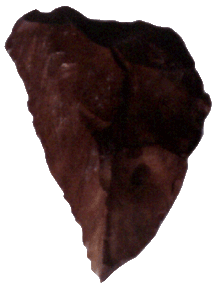
A stone tool dated to the Old Stone Age, excavated from Cagayan.2

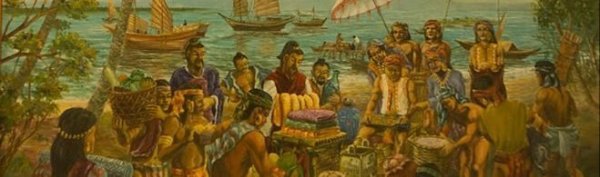
Tools for sawing and drilling, as well as weapon implements, were excavated and taken as evidence for settlement during the Stone Age and primitive technology.3 Long before the arrival of the Spaniards, Philippine natives already had close commercial contact with neighboring communities in Southeast Asia, China and even as far as Japan.

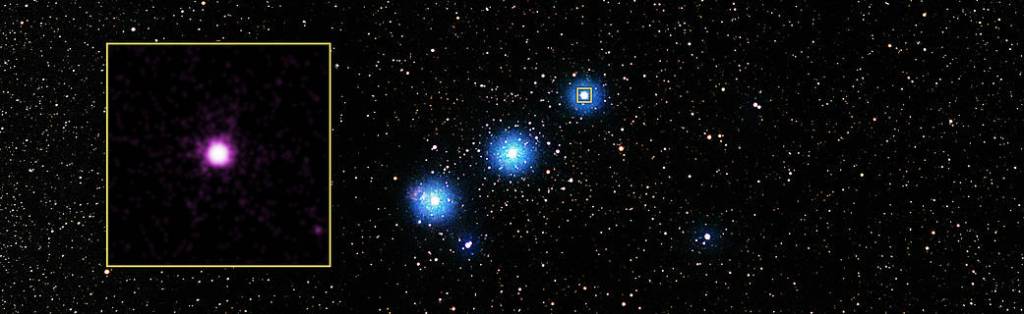
Orion’s Belt (Dela Orionis is zoomed in).4
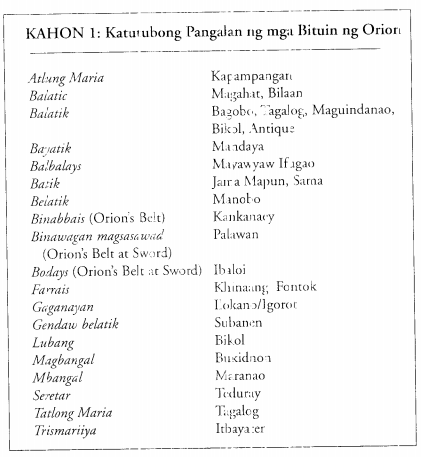
Native Names of Stars in Orion’s Belt.5

Natives used constellations for timekeeping6 such as tracking seasons for agricultural purposes3 and social functions7. Indigenous people since time immemorial have used knowledge of the movement of heavenly bodies for essential facets of civilization, and so the field of study dedicated to this native astronomy was born, ethnoastronomy5.

The Laguna Copper Plate.8

The Laguna Copper Plate is the earliest document that reveals the earliest use of mathematics. It is dated to be written in the late 9th century. And It is written in an ancient Malay Language, using the Old Kawi Script, detailing the absolution of a nobleman and his family of debts.9

Sources:

  1. Patricia Lazo Vega. “Charted territories: the Philippines as depicted in old maps,” GMA News, July 4, 2012, https://www.gmanetwork.com/news/lifestyle/artandculture/264136/charted-territories-the-philippines-as-depicted-in-old-maps/story/.
  2. “Flake Tools,” National Museum of the Philippines, las modified February 10, 2014, https://www.nationalmuseum.gov.ph/nationalmuseumbeta/Collections/Archaeo/Flake.html.
  3. Crisanto M. Lopez. Science and Technology in the Philippines (Ateneo de Manila University, 2018).
  4. Molly Porter. “More Than Meets the Eye: Delta Orionis in Orion’s Belt,” National Aeronautics and Space Administration, last modified August 7, 2017, https://www.nasa.gov/mission_pages/chandra/more-than-meets-the-eye-delta-orionis-in-orions-belt.html.
  5. Dante L. Ambrosio. “BALATIK: Katutubong Bitiun ng mga Pilipino,” Philippine Social Sciences Review 57, nos. 1-4 (2005). https://bangkanixiao.files.wordpress.com/2012/09/ambrosio-balatik-katutubong-bituin-ng-mga-pilipino.pdf
  6. William Henry Scott. “Natural Science,” in Barangay: 16th Century Philippine Culture and Society, (Ateneo de Manila University Press, 1994) 121-124.
  7. Chang Casal. “5 unique things Filipinos believed about the sun, moon, and stars,” CNN Philippines, January 23, 2019, https://cnnphilippines.com/life/culture/2019/01/22/Filipinos-astronomy-beliefs.html?fbcid.
  8. “The Laguna Copperplate Inscription,” Wikipedia, December 2, 2017, https://commons.wikimedia.org/wiki/File:Inskripsyon_sa_Binatbat_na_Tanso_ng_Laguna.jpg.

Blog at WordPress.com.

Up ↑

Design a site like this with WordPress.com
Get started