National Science and Technology Plan, 2002–2020 (NSTP) and the Harmonized Agenda for Science and Technology, 2002–2020
R&D Researchers and Personnel per million population from 2002 to 2013.1
The Philippine government focuses on building technological self-reliance through the National Science and Technology Plan, 2002-2020. Meanwhile, the Harmonized Agenda for Science and Technology, 2002-2020 builds on NSTP, 2002-2020 to provide detailed plans to achieve technological self-reliance especially for the purposes of economic growth and disaster risk reduction. The aims of these plans are reflected in legislation such as the Fast-Tracked Science and Technology Scholarship Act of 2013 which “expands the coverage of existing scholarship programmes and strengthens the teaching of science and mathematics in secondary schools,” and the Philippine National Health Research System Act of 2013 has :formed a network of national and regional research consortia to boost domestic capacity.”2
Source:
United Nations Educational Scientific and Cultural Organization. “Southeast Asia and Oceania,” in UNESCO Science Report: towards 2030 (Paris: UNESCO, 2015), 693-731. https://unesdoc.unesco.org/ark:/48223/pf0000235406.
DOST-SEI promoting applications for the scholarship program through the #Push4Science caravan.
The Department of Science and Technology through the Science Education Institute offers a scholarship program for students enrolled in “priority courses,” these courses are aligned for future careers in science and technology to increase human capital in the field. This scholarship is designed to cater to students in both low and middle income backgrounds so long as they pass an aptitude test, a screening process, and maintain high academic performance during their study, should they pass the two prior stages mentioned.
Project NOAH (Nationwide Operational Assessment of Hazards)
This is a screenshot of the vicinity of Ateneo on the Project NOAH website. The highlighted areas indicate a flood hazard reaching 0.5 meters in five years’ time based on different rainfall scenarios. The area of Ateneo that is at risk is estimated to be around 0.02 km2, which is concentrated at SOM forest.
Project NOAH is a multidisciplinary research center between research institutes of the University of the Philippines, the Philippine government, and other non-government organizations. These groups collaborate to improve Disaster Readiness and Risk Reduction in the Philippines, as well as climate change adaptation and mitigation efforts, and other related research interests and thrusts.2
It is established in response to a call for a more “accurate, integrated, and responsive disaster prevention and mitigation system, especially in high-risk areas throughout the Philippines” during the Aquino administration. Project NOAH has the following components: 1) Distribution of Hydro-meteorological Devices in hard-hit areas in the Philippines (Hydromet); 2) Disaster Risk Exposure Assessment for Mitigation – Light Detection and Ranging (DREAM-LIDAR) Project; 3) Enhancing Geohazards Mapping through LIDAR; 4) Coastal Hazards and Storm Surge Assessment and Mitigation (CHASSAM); 5) Flood Information Network (FloodNET) Project; 6) Local Development of Doppler Radar Systems (LaDDeRS); 7) Landslide Sensors Development Project; and 8) Weather Hazard Information Project (WHIP).3
The executive department of the Philippine government responsible for the coordination of science and technology-related projects in the Philippines and to formulate policies and projects in the fields of science and technology in support of national development.1 The mission of the agency is to direct, lead, and coordinate the country’s scientific and technological efforts geared towards maximum economic and social benefits for the people.2
The Department of Science and Technology (DOST) as an executive department is composed of different agencies and services directed in cultivating the culture of science and technology in the Philippines. The following are some of the scientific and technological agencies/services instituted by DOST:
1. Philippine Atmospheric, Geophysical and Astronomical Services Administration
PAGASA is mandated to “provide protection against natural calamities and utilize scientific knowledge as an effective instrument to ensure the safety, well-being and economic security of all the people, and for the promotion of national progress.” (Section 2, Statement of Policy, Presidential Decree No. 78; December 1972 as amended by Presidential Decree No. 1149; August 1977).3 The mission of such an agency is to secure the lives and properties of the state through timely, accurate and reliable weather-related information and services.4
2. Philippine Nuclear Research Institute
The PNRI is mandated to undertake research and development activities in the peaceful uses of nuclear energy, to institute regulations on the said uses and to carry out the enforcement of said regulations to protect the health and safety of radiation workers and the general public.5 This agency aims to improve the quality of the Filipino lives through the highest standards of research and development, specifically in nuclear and radiation services, as well as to efficiently implement nuclear and radiation policies for safety practices and regulations.6
3. Philippine Institute of Volcanology and Seismology
PHIVOLCS is principally mandated to mitigate disasters that may arise from volcanic eruptions, earthquakes, tsunami and other related geotectonic phenomena.7 The department provides timely, quality and socially-inclusive information and services for the warning, disaster preparedness and mitigation through the development and application of technologies for the monitoring and accurate prediction of related hazards, risks and natural calamities, such as volcanic eruption, earthquakes and tsunami.8
4. Science and Technology Information Institute
STII is one of the service institutes of the Department of Science and Technology (DOST) established as the information and marketing arm of the DOST by virtue of Executive Order No. 128.10 The goals of such an agency are to establish a science and technology databank and library, to disseminate science and technology information, and to undertake training on science and technology information.11
5. Philippine Science High School System
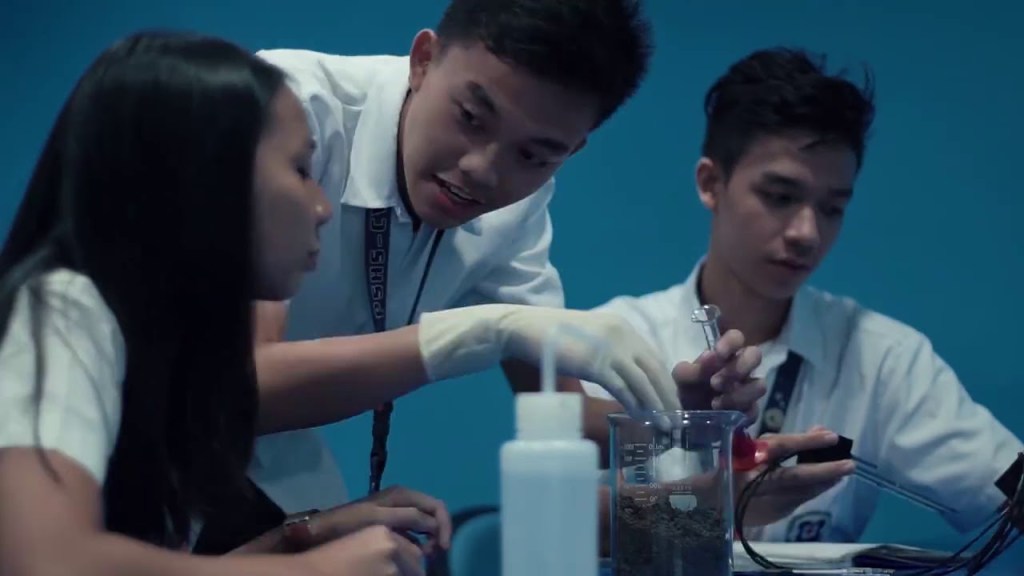
The Philippine Science High School System, an attached agency of the Department of Science and Technology, operates under one System of Governance and Management, provides scholarships to students with high aptitude in science and mathematics.12 The System prepares its students for careers in Science and Technology and contributes to nation-building by helping the country attain a critical mass of professionals and leaders in Science and Technology.13
6. Technology Application and Promotion Institute
TAPI is created by virtue of Executive Order No. 128 as one of DOST’s service agencies with the primary responsibility of promoting the commercialization of technologies and marketing the services of other operating units of the Department.14 The agency is directed in an effective and efficient innovation system towards the adoption and utilization of inventions, innovations, and services.15








 Science and Technology